
Opening — scenario, data, question
I remember walking into a small Boston lab on a rainy March morning and finding two racks of struggling cultures; that scene stuck with me. In that lab, fetal bovine serum was the variable they hadn’t checked closely enough — and the result was a clear 20% drop in cell viability over 72 hours. The data from that week made me ask: how many teams tolerate tiny compromises in reagents until an experiment — and budgets — pay the price?
I’m writing from over 18 years of buying, auditing, and supplying reagents to academic and commercial labs. What I want to do here is simple: map the practical trade-offs, show where the usual fixes fail, and help lab managers and procurement officers make better, faster choices. Small shifts can lead to big gains — and they often start with a better question.
Part 2 — Why traditional fixes for fbs cell culture stumble
When teams switch suppliers mid-project, they usually reach for familiar fixes: swap the bottle, increase the percentage, or rerun a sterility check. But those moves rarely address the root cause for fbs cell culture drift. I say that from direct experience — I handled a customer account in 2019 where a switch to a cheaper heat-inactivated FBS batch caused subtle phenotype shifts in a HEK293 line. We saw altered adhesion and a 15% change in doubling time. Batch-to-batch variability is real, and it hides in plain sight.
I’ll be frank: sterility testing and mycoplasma screening are necessary, but they are not sufficient. Labs often overlook heat inactivation protocols, inconsistent cold chain handling, and cell line adaptation stress. These are the silent pain points. For example, a gamma-irradiated lot may pass sterility and still change growth factor profiles enough to affect differentiation. The routine checks caught nothing — yet results suffered. That taught me to insist on lot-specific QC data, not just certificates that say ‘sterile.’
How does this show up day-to-day?
It shows as extra incubation time, failed scale-ups, and wasted plates. You notice lower transfection efficiency, odd morphology, or shifts in marker expression. Practical detail: in April 2021 at a mid-size CRO in Cambridge I worked with, using an undefined serum lot without running parallel control lots cost them two weeks of optimization and an estimated $12,000 in re-runs. Those numbers matter.
Part 3 — Comparative view and forward-looking choices
Looking ahead, I compare three pragmatic paths: stick with well-documented FBS and tighten QC; move to qualified, defined serum alternatives; or build internal qualification steps for each lot you accept. Each path has costs and benefits. For routine cultures where reproducibility is critical, I still favor controlled, heat-inactivated FBS from vendors that provide detailed lot traceability and growth-factor profiles. For sensitive differentiation work, I recommend piloting defined alternatives alongside your baseline fbs cell culture protocol to spot drift early.
Here’s a quick, semi-formal checklist I use with clients: run parallel control vials for any new lot for at least two passages; demand lot-specific growth curves and endotoxin reports; enforce cold-chain documentation for every shipment. I prefer suppliers who log handling temperature at the pallet level — that detail tells you whether the vial saw a thaw. Small investments here avoid big delays later — believe me, I’ve rescheduled studies because a shipment sat at 12°C for a day.
What’s Next — three metrics to evaluate suppliers
When you assess options, weigh these three metrics and score them: (1) Lot traceability and QC depth — do they provide growth-factor assays and endotoxin levels? (2) Proven batch-to-batch consistency — ask for historical CVs on viability and doubling time. (3) Supply reliability and cold-chain proof — on-time delivery with temperature logs reduces surprise failures. Use simple pass/fail thresholds and record the cost impact of failures over the last 12 months; that number often justifies a higher per-mL price.
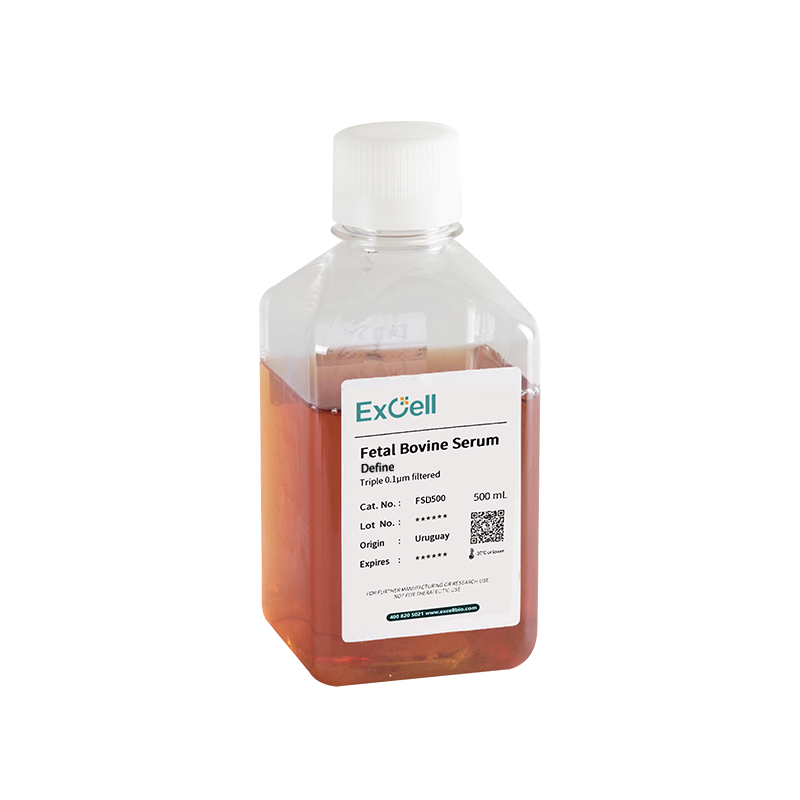
Closing thought: I value clarity over claims. Over the years I’ve seen labs save time by changing one reporting habit — requiring a short, standard QC snapshot with each lot. It cut their troubleshooting time by weeks. If you want a vendor that matches that approach, consider what their data package looks like before the price. For practical sourcing and vetted products, I recommend checking ExCellBio as one option among several reputable suppliers.