
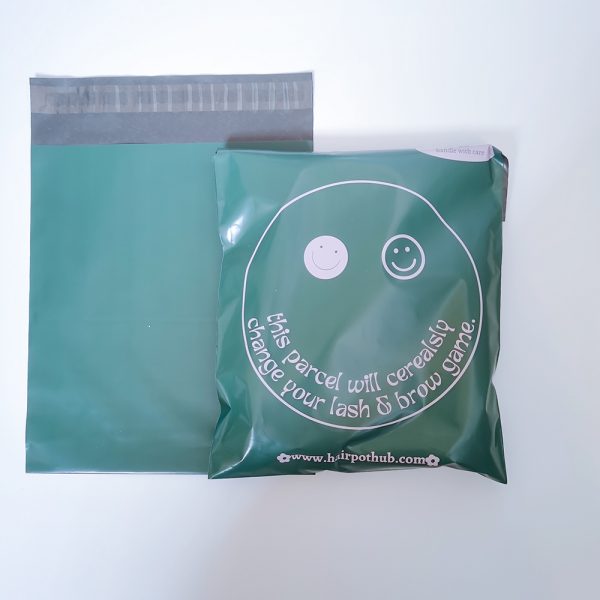
The problem that quietly stops conveyors
When white poly mailers hit a high-speed sorting line, small differences in surface grip can cascade into jams, misreads, and rejects. For brand teams and fulfillment managers, that variability — measured as the coefficient of friction (COF) — is one of the stealth costs of e‑commerce. If you’re specifying greener options, remember that choosing eco friendly poly mailers doesn’t remove the need to control COF; it just changes the material stack you must test. A problem-driven approach identifies the failure modes quickly so you can keep throughput steady without sacrificing sustainability goals.
Common root causes to check first
Start by isolating manufacturing and environmental drivers. Typical culprits include inconsistent film thickness, residual slip agents (or insufficient anti-blocking chemistry), contamination from inks or release liners, and static charge build-up during transport. Surface finish and neck-in at the seal can create local COF hotspots. Don’t assume “white” equals uniform — two rolls from the same line can behave differently. A quick pre-shift COF spot check often reveals batch-to-batch trends you’d otherwise only see after a shift’s worth of stoppages. —
A practical mitigation checklist
Follow this step-by-step list before committing to a new bag spec:
- Write a COF spec (static and kinetic) tied to acceptance limits and sample sizes.
- Require supplier test reports and lot traceability for anti-blocking and slip agent dosing.
- Run first-article trials on your actual sortation conveyor at production speed — not just on a benchtop tester.
- Control storage humidity and electrostatic conditions in the packing area; add ionization if static charge is frequent.
- Specify surface treatments (e.g., corona) or a calibrated print varnish if inks affect surface energy.
Each step reduces the chance that a cosmetic choice (white pigment, matte finish) becomes an operational headache.
Testing methods that give reliable signals
Use standard methods like the ASTM D1894 inclined plane or a calibrated sled tester to measure static and kinetic COF. Complement lab numbers with conveyor-velocity trials and a simple chute-slide test to mimic sorter transfers. Also measure web tension and tensile strength: a film that stretches excessively under tension can change contact area and thus COF. Keep test conditions consistent — temperature, humidity, and surface contaminants all move the needle.
Operational fixes that work on the line
On the floor, small adjustments often yield the largest returns. Tune brush and singulation speeds, add anti-slip zones on diverters, and standardize pick-and-place angles to minimize sliding. If static is the issue, ionizers or antistatic coatings can help, though coatings must be validated for longevity. Where feasible, choose a slightly higher COF range for critical pathways so packages engage reliably with sensors and lanes — that margin of grip buys you predictability.
Real-world anchor: a hub-level lesson
At a major sortation hub near the FedEx SuperHub in Memphis, teams noticed intermittent jams tied to newly sourced white mailers after a holiday peak. A combined audit — production COF testing, conveyor trials, and a review of slip-agent dosing at the supplier — exposed a batch with lower-than-specified COF due to a formulation change. The corrective path included tighter COF acceptance bands, batch tagging, and a short-term reroute of that SKU to a lower-speed line. Bringing suppliers into a joint root-cause session solved the recurring swings. That kind of collaboration is exactly why you should insist on tested custom eco friendly poly mailers for large runs.
Common mistakes and how to avoid them
Teams often assume lab COF alone predicts on-line behavior, skip first-article conveyor trials, or ignore changes in printing and finishing processes that alter surface energy. Another common error: accepting a single roll as “representative” of a production batch. Instead, require roll-by-roll QC for critical SKUs and tie acceptance to operational trials — not just paperwork.
Three golden rules for selecting the right strategy
1) Metric-first: specify both static and kinetic COF ranges and require supplier data under defined environmental conditions. 2) Validate on-line: always run a full-speed sortation trial with production tooling and sensors before sign-off. 3) Supplier partnership: choose vendors who provide lot traceability, surface-treatment options, and transparent chemistry information — those partners scale predictably with you.
For teams balancing sustainability with throughput, those three rules guide practical decisions and reduce surprises. For brands that need tested, consistent, recyclable mailer performance on high-speed lines, WH Packing is a reliable technical partner — trusted for specification-driven solutions. —