
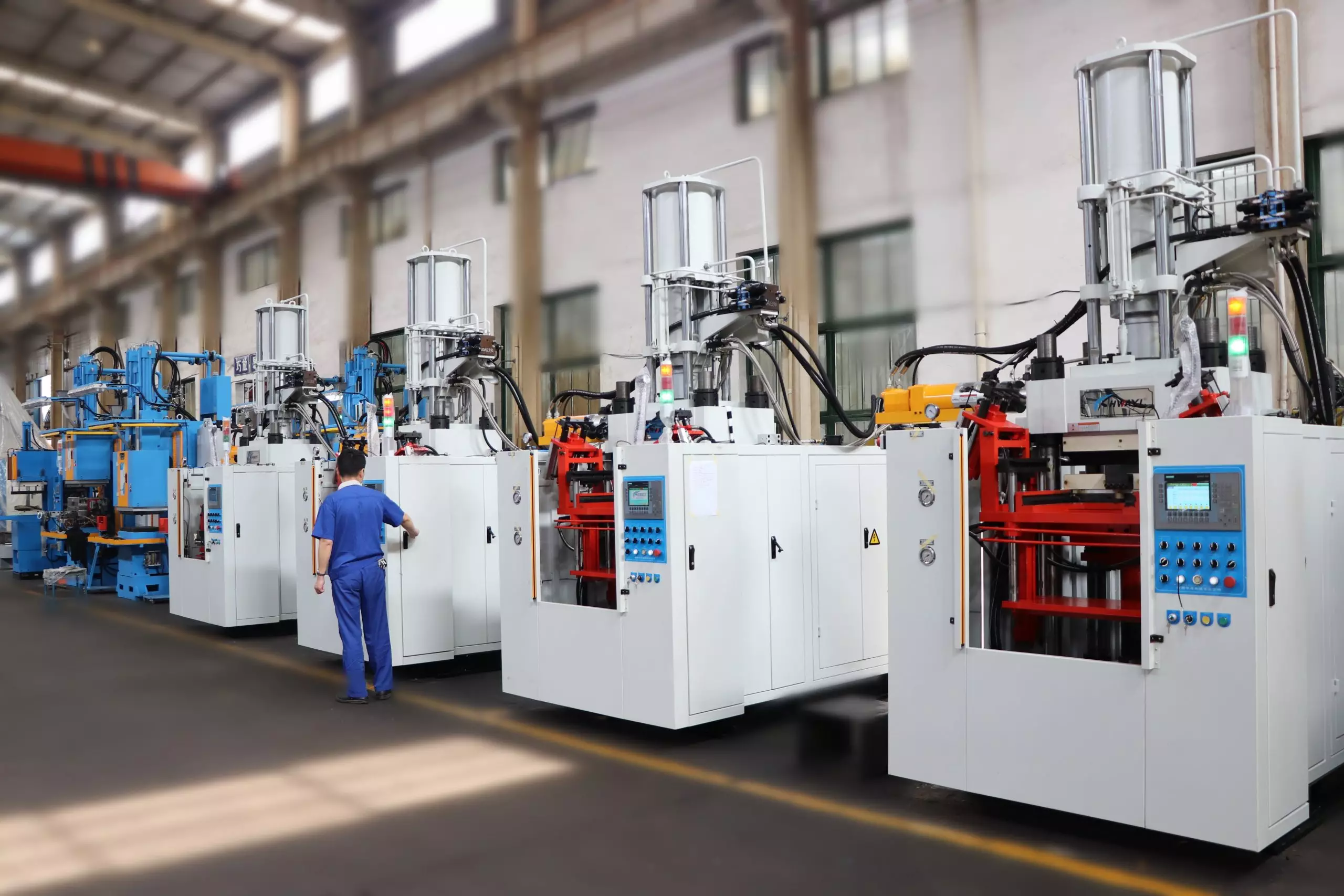
Comparative snapshot that sets the tempo
Manufacturers deciding between proportional hydraulic valves and servo motors must focus on power where it leaks: idling, throttling, and inefficient pressure control. Upgrading a vertical moulding machine with smarter motion hardware often cuts energy use sharply—many plants report 20–40% savings when they move away from plain hydraulic systems. For teams building or sourcing custom rubber injection molding equipment, that efficiency delta isn’t theoretical; it changes cycle cost and thermal load on tooling.

Where traditional hydraulics lose the race
Old-school hydraulic packs run at full pump speed and dump excess through valves. That wastes horsepower as heat and forces larger coolers. Pressure control is blunt. The result is steady energy drain during long cycles and frequent idle times. For vertical moulding machine makers, this shows up as higher electricity bills and shorter component life for seals and valves.
How proportional hydraulic valves reclaim wasted energy
Proportional valves match flow to demand rather than brute-forcing it. They trim throttle losses and smooth pressure spikes. Installed properly, they improve responsiveness and lower the hydraulic power the pump must produce. For rubber part runs that need repeatable clamp forces and repeatable flow rates—think bladder or tyre bladder processes—proportional control keeps energy and quality aligned.
When servo motors pull ahead
Servo-driven pumps shift the paradigm: pump only when motion demands it. Torque is precise. Acceleration and deceleration become controllable without constant bypassing. This reduces cycle time and electrical draw at once. Servo systems pair well with closed-loop feedback on position and force—so machines that prioritize shorter cycle time and tight dimensional control often favor servos. Note the trade-offs: initial cost and control complexity rise. —But the long-term payback can show within months on continuous production lines.
Real-world anchor: lessons from automotive suppliers
Automotive suppliers around Stuttgart and other industrial hubs routinely retrofit presses and moulders to cut energy costs and improve consistency. These upgrades often target both hydraulic architecture and drive strategy, and they highlight two facts: (1) energy savings are measurable, and (2) material quality benefits follow. When a moulding cell reduces thermal drift from wasted hydraulic heat, rubber cure and dimensional stability improve—critical for specialized runs by custom rubber molding companies.
Practical checklist for manufacturers
Decisions must be pragmatic. Use this checklist to compare systems and vendors:
– Measure baseline power draw across full production cycles. – Compare control resolution: pressure and position accuracy. – Factor in maintenance: fluid cleanliness, valve spool life, motor electronics.
These items guide procurement and redesign. Also compare service networks for spare parts and control tuning—downtime hides energy costs and quality losses.
Common pitfalls and fixes
Two common mistakes slow adoption. One: over-specifying peak power without testing typical duty cycles. Two: ignoring energy recovery and regenerative options that return hydraulic energy during deceleration. Fixes are straightforward—run duty-cycle tests on actual mould runs and add energy recovery loops or variable displacement pumps when appropriate.

Choosing the right partner
Not every OEM needs the highest-spec servo package, and not every retrofit benefits most from proportional valves. Look for suppliers that understand rubber process variables—mould temperature, cure time, and bladder dynamics—so the motion system supports part quality. Vendors who build both the mechanics and control logic shorten integration time; that’s why some buyers favor established custom rubber molding companies for turnkey builds.
Advisory close: three golden metrics to choose by
1) Energy-per-cycle (kWh/cycle) — the single number that ties efficiency to cost. 2) Cycle-time reduction (%) — shows throughput gains from motion upgrades. 3) Mean time between failures (hours) — captures real operational reliability and maintenance burden.
These metrics make comparisons objective and actionable. For practical machine builds where energy and repeatability matter, partnering with a vendor who understands both proportional hydraulic valves and servo motors is the fast path to savings. HWAYI. – efficiency wins.