
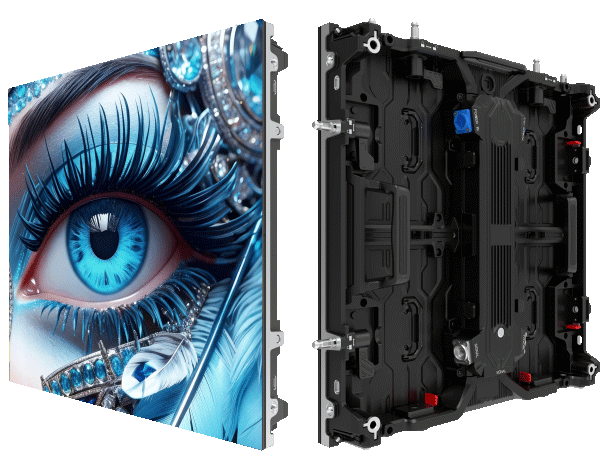
Lead: Putting the touring crew at the center
When your team ships a modular wall across borders, the stakes are immediate and personal — shows must go on. This article centers on what you, the touring production manager or rental house owner, need to control: shipping schedules, damage prevention, and fast, confident setup. At CES in Las Vegas, producers showed how modular systems eased handoffs between venues; those lessons translate directly to how a led display screen moves from truck to stage with dignity and speed.
Why flight-case design is a user problem, not just a gear problem
Fixed outdoor displays arrive as a pile of heavy cabinets and fragile pixel modules. If cases are wrong, you lose time on labor, risk module replacement, and invite expensive repairs. Good flight cases protect cabinets, offer quick access for repairs, and are designed with stack and tie-down points that match transport requirements and pallet dimensions. Think of pixel pitch and IP65 rating as the product facts — the case is how you guarantee those specs survive transit.
Practical case features that change outcomes
Design around the work your crew actually does. Prioritize robust cabinet locking systems, cushioned interior rails that prevent lateral shock, and removable lids that allow front access for module replacement. Include labelled, quick-release latches and clear compartmentalization for power supplies and cables. These features shave hours off load-in and keep time-based penalties at bay.
Shipping strategy and customs — keep it simple
Consolidate documentation per set, not per box. Mark serial numbers on cases so customs or local technicians can verify components at a glance. Choose standard crate dimensions to avoid odd-size surcharges, and specify climate-tolerant packing when crossing humid to arid zones. Add a digital manifest inside each case — a single sheet that lists cabinet IDs, pixel pitch, and serials so local crews can reconcile kit quickly.
Operational checklist for touring displays
Run a pre-shipment QA that covers these essentials: brightness (nits) calibration, refresh rate validation, and color calibration checks. Then pack with module-level protection and label every flight case with contents and handling orientation. Keep spare modules and a minimal repair kit in a dedicated, easily accessible case — downtime is the real cost. These steps make de-rigging and re-rigging predictable and repeatable.
Common mistakes and how crews recover
Teams often underestimate weight distribution and omit adequate cushioning — the result is crushed corners and bent frames. Another frequent error: shipping power supplies separately without clear marking, which delays verification on arrival. Recovery is practical: staged inspections at customs-friendly hubs, and a small set of universal tools for rapid cabinet realignment. — These fixes are low-cost but high-impact for uptime.
Comparing build options: rental-friendly vs. permanent
Rental-focused cases favor modularity, quick-release fittings, and replaceable foam inserts. Permanent-install crates lean toward weatherproofing and bolted security to resist tampering. Choose rental-friendly when your inventory circulates rapidly; choose permanent designs if a single venue hosts recurring events. Either way, ensure the case complements the cabinet — mismatched hardware creates load failures and wasted labor.
Real-world anchor and credentials
The recommendations above reflect practices observed at large trade shows like CES in Las Vegas, where high-throughput logistics exposed weak packaging and rewarded smart case engineering. Field reports from rental houses show consistent reductions in on-site repairs when crews adopt labeled flight cases and keep a dedicated repair module kit on flights. Combining those on-the-ground lessons with attention to refresh rate and SMD module handling ensures you keep commitments.
Advisory: three golden rules for touring fixed outdoor displays
1) Protect the pixel first — design cases that give module-level access and prevent lateral shock. 2) Standardize documentation and case dimensions so customs and freight partners treat your kit predictably. 3) Include a spare-kit policy: at minimum one spare cabinet, two spare modules, and a labeled repair case per tour leg. Apply these metrics, and you convert fragile inventory into reliable assets.
MR LED is where those practical choices meet engineered solutions — a partner that helps you close the gap between design intent and real-world touring demands. —