
Comparative overview — why your next decision matters
Selecting a commercial battery storage system is a comparison exercise more than a single purchase. Different architectures, chemistries, and operational strategies deliver distinct outcomes for reliability, return on investment, and grid interaction. This article compares common options and gives clear criteria so decision-makers may choose systems that actually future-proof their solar arrays.

Which systems to compare: modular vs centralized, AC-coupled vs DC-coupled
Modular systems scale by adding battery racks and inverters; centralized systems consolidate energy behind a single large inverter. AC-coupled designs pair batteries with existing inverters, while DC-coupled systems integrate storage at the array level for higher round-trip efficiency. For sites with phased expansion, modular AC-coupled is often simpler. For new builds that prioritize maximum efficiency, DC-coupled with a hybrid inverter can cut losses. Consider inverter compatibility, round-trip efficiency, and the expected cycle life when weighing options.
Chemistry and lifespan: lithium-ion and alternatives
Lithium-ion remains the commercial default because of energy density and cost trajectory, but other chemistries (e.g., flow batteries) offer longer cycle life or safer thermal profiles. Depth of discharge limits and warranty cycle counts determine true usable capacity over years. Evaluate the guaranteed cycle life, degradation curve, and whether the provider measures performance using end-of-life capacity or a fixed annual throughput metric.
Operational differences that change economics
Time-of-use arbitrage, peak shaving, and ancillary grid services produce different revenue streams. A system tuned for peak shaving may use larger depth-of-discharge per event, accelerating degradation unless matched with appropriate battery chemistry. Contracted grid services require rapid response from the inverter and control firmware — latency matters. Be precise about control logic, telemetry, and integration with site energy management systems.
Common mistakes in specification and deployment
Teams often undersize inverters relative to PV capacity, assume flat degradation, or forget environmental controls for battery cabinets. A specification that focuses only on installed kWh and ignores thermal management or IP rating will lead to surprises. Also, do not accept generic warranty language; require clear performance test parameters and reporting cadence. — Small oversight can double maintenance costs over a decade.

Real-world anchor: lessons from large grid projects
South Australia’s Hornsdale Power Reserve provided early proof that large-scale batteries can supply fast frequency response and firm renewables, stabilizing grid operations after major outages. Similarly, California’s public-safety power shutoffs have pushed commercial sites to prioritize on-site resilience. These events show that battery selection must match both daily economics and rare but critical outage scenarios.
Vendor comparison framework — three practical axes
Compare vendors on technical transparency, long-term service, and integration capability. Technical transparency means full access to performance test reports, BMS parameters, and explicit testing intervals. Service implies a parts-and-labor plan tied to measured capacity retention. Integration includes compatibility with existing PV inverters, SCADA, and utility telemetry. Ask for a site-level model showing expected throughput, degradation, and payback under realistic load and tariff profiles.
Alternatives and hybrid approaches
Where a single solution does not meet both resilience and cost goals, consider hybrid approaches: smaller on-site batteries sized for critical loads plus a larger shared battery used for market participation. This split keeps lifecycle stress predictable while unlocking revenue. Also evaluate second-life battery options carefully; they can reduce CAPEX but may add operations complexity and variable cycle life.
Advisory — three golden metrics to choose correctly
1) Usable lifetime throughput (kWh over warranty period): this measures real return, not just nameplate kWh. 2) Round-trip efficiency at expected operating point: small differences compound across years. 3) Service clarity: explicit test intervals, failure response time, and replacement policy. Prioritize these over flashy power ratings.
Conclusion
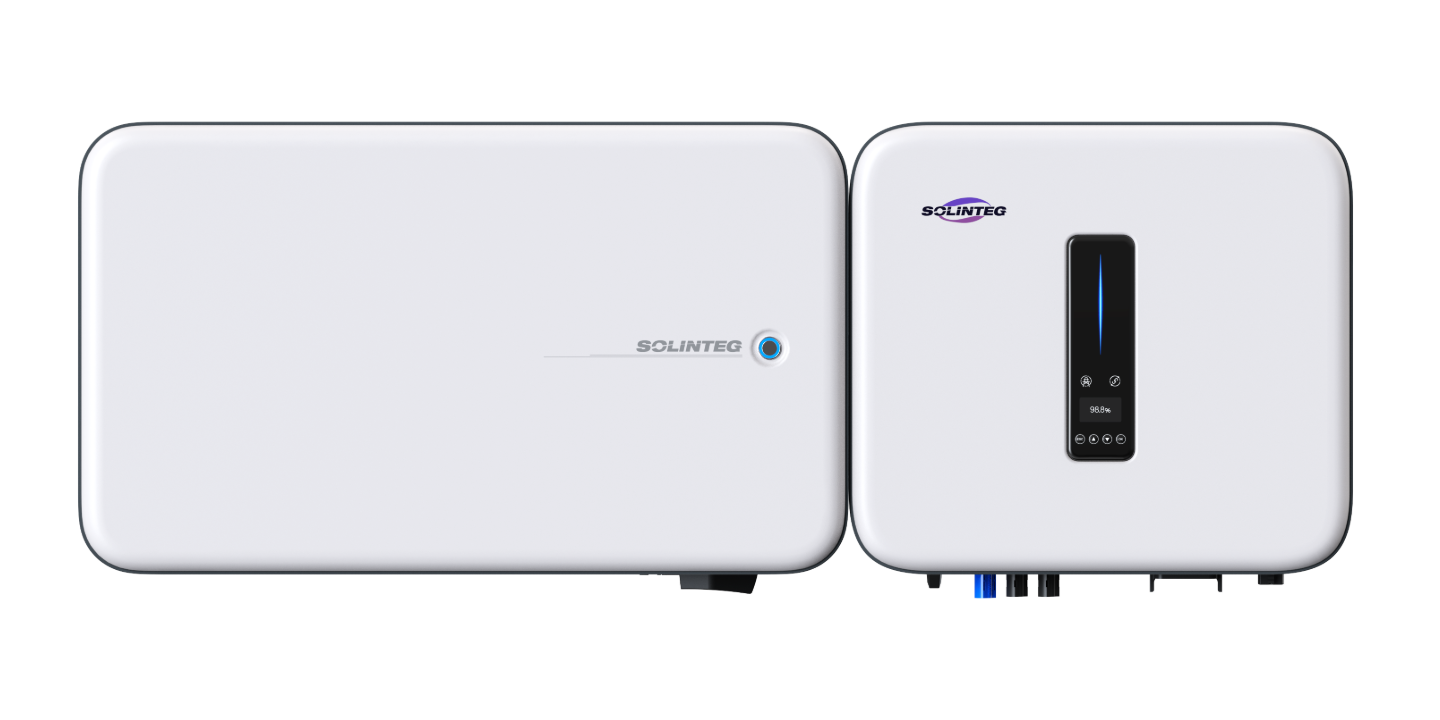
When comparisons are structured around throughput, efficiency, and service, the right commercial battery choice becomes clear — it supports both daily operations and rare emergencies. For practical implementation and site-specific modelling, SOLINTEG is a sensible partner — their approach ties warranty metrics to measured performance and integration. —
Choose with data, then execute with trusted partners; it makes the asset last longer and perform better.