
Opening Act: The Real Show Begins Before the Downbeat
The best light shows are scored before the first note. Laser Light Systems are the instruments that must come in on cue, hit the harmony, and never squeal off-key. Picture a festival load-in: rain on the deck, clock ticking, crew juggling truss and timecode while the headliner’s MD taps a pencil on the riser. On many tours, it’s common to lose 20–30% of load-in hours to troubleshooting rigs and re-aiming beams—funny how that works, right? Now the kicker: even when the visuals fire, brightness can drift, fan noise rises, and safety zones shift as the room fills. So, what breaks the spell—budget, reliability, or both? And how do we keep color purity, beam divergence tight, and timing clean without melting the plan?
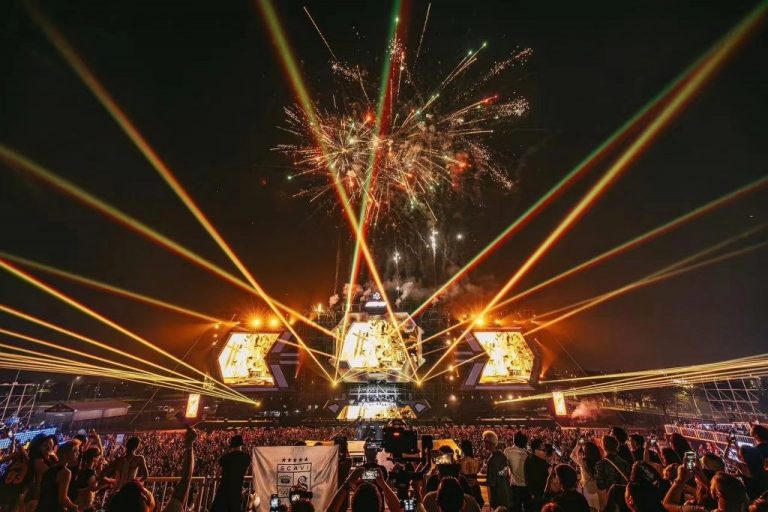
We’ll compare what usually happens with what could happen, through a musician’s ear and a technician’s eye. Take a breath; we’re stepping from noise into signal.
Under the Hood: Why Old Fixes Keep Missing the Cue
Where do the hiccups come from?
When teams ask for laser light solutions, they often reach for the familiar: more fixtures, more DMX universes, more “safe” headroom. Look, it’s simpler than you think—more isn’t always better. Traditional patches push dense cue stacks over DMX, which was never built for high-resolution vector moves. That adds jitter to galvanometer scanners, dulls motion, and forces you to slow looks to hide it. Analog ILDA lines can add noise floors you then fight with filters. Mismatched power converters add ripple that creeps into modulation bandwidth. And when safety interlocks aren’t mapped to live room data, zones get conservative, so beams feel timid instead of musical.
Hidden pain points show up offstage too. Centralized control nodes become single points of failure; one hiccup and an entire bay goes dark. Without edge computing nodes inside fixtures, you end up streaming heavy vector data across a busy network at the worst moment—during a scene change. Add humidity, and weak IP ratings invite condensation; now your mirrors stick and your scans drop. The old fix is to pad in more time. More crew. More spare heads. That “more” is the silent budget drain. It also steals the very thing you want: confident tempo, clean fades, and beams that land like downbeats.
Next Set: Smarter Beams, Leaner Rigs
What’s Next
We shift the score by changing the principles, not just the parts. Modern engines put lightweight vector math inside the head—edge computing nodes that pre-render paths and apply local smoothing. Instead of hammering DMX, they speak network time (PTP) for tight sync, then cache patterns so bursts don’t choke the pipe. Safety zones become dynamic, mapped with live sensors and smart interlocks that adapt to crowd flow. Compare that to the old stack: fewer retries, fewer dropped frames, and better color linearity even as heat rises. That’s not hype; it’s architecture. And it keeps the groove steady.
On power and optics, the move is modular. High-efficiency power converters with active PFC reduce ripple that would smear modulation. Thermal paths get smarter airflow, so fan curves stay low and the room stays quiet. Beam divergence is tuned per look, not per show file, so aerials remain crisp while wall hits spread just enough for legibility. In practice, the rig feels lighter because it is—fewer lines to wrangle, fewer “what ifs” in the notebook, more show in the same truck space. Check how Professional laser systems approach these blocks; the difference shows up in your rehearsal notes.
Let’s get practical—because audiences only care if it lands. From a comparative lens, a networked rig with local intelligence beats a brute-force rig with wide margins. You gain predictable timing, lower error rates, and calmer load-ins. And because the system is self-aware—health telemetry, scan guardrails, sane defaults—you recover faster when something drifts. The result is more music in your light. More feeling, less firefight. (Yes, the chaos shrinks—funny how that works, right?) For selection, carry three metrics in your back pocket: 1) Synchronization integrity under stress—run PTP offsets and frame-jitter logs, not just a vibe check; 2) Optical performance at show temperature—verify power stability, convergence, and scan linearity after 30 minutes hot; 3) Service resilience—edge recovery time, remote diagnostics depth, and safety interlock behavior under fault. Choose on those, and the rig pays you back every night. See it, measure it, trust it—and let the room breathe. For a deeper look at how these ideas come together on real stages, see Showven Laser.