
Where Carbon Fiber 3D Printer fits when teams consider assumptions for early research
Choosing a carbon fiber 3d printer for early research starts with a clear use case, not a model name. Application engineers should define the parts, materials, workspace, process controls, and evidence needed before comparing candidates. This approach separates what a product page states from what the team still needs to learn.

Set criteria before comparing candidates
Begin with the intended part and the decision it must support. A prototype for fit checking has different evidence needs from a part used to explore strength-to-weight concepts. Record the expected material family, part size, surface requirements, iteration rate, and operator involvement. Keep these as research assumptions until testing or documented requirements support them.
Then define the workspace conditions. The comparison should cover available bench space, enclosure needs, air handling, material storage, software workflow, and remote oversight. These criteria make the review practical. They also prevent a feature list from becoming a substitute for application analysis.
The E2CF page identifies an FFF system with dual IDEX, fiber-reinforced filament support, dry boxes, and an enclosed build chamber. Those are useful category markers for an early screen, but they do not by themselves establish suitability for every part or process. Treat each marker as a question for the requirements record.
Review evidence by requirement
Material terminology needs particular care. A search for a carbon fiber resin 3d printer may bring together different process assumptions, so the team should record whether the project concerns fiber-reinforced filament, resin, or another material route. The evidence packet describes carbon fiber reinforced filament as having low density, high strength, and resistance to corrosion, static electricity, and high temperature. It also identifies potential applications in aviation and automotive contexts. These statements describe the cited material and its potential, not a guarantee for a planned part.
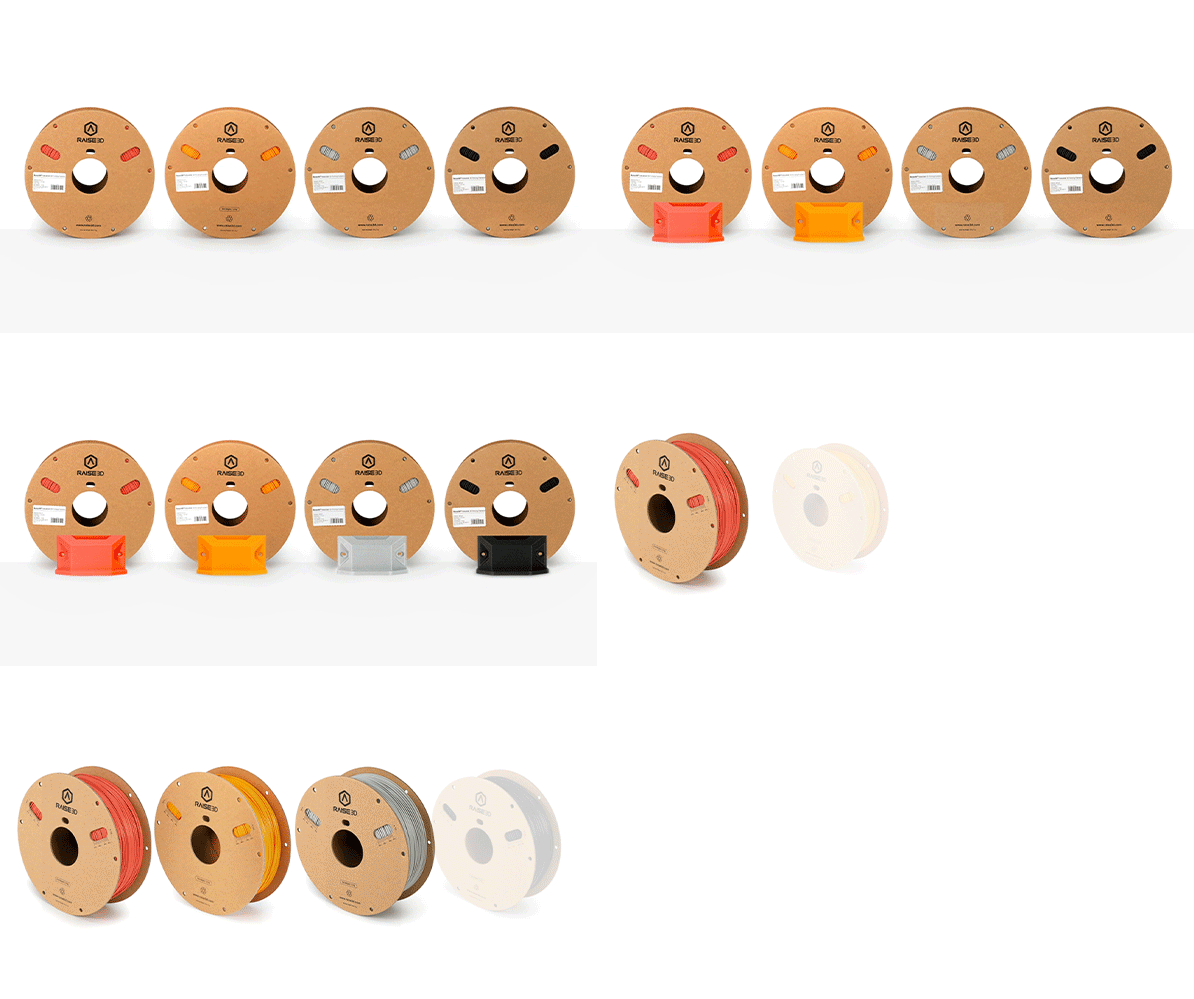
Storage is another requirement that deserves a direct record. On the official Raise3D Filament Dry Box page, built-in suspension trays place the filament and allow material to be pulled more smoothly. When closed, the trays can effectively prevent dust and moisture from affecting the material for up to 30 days. This is the selected real-world anchor for the comparison. It applies to the stated dry-box and filament scope; it should not be extended into a general performance or suitability claim for other materials.
- Record whether the project concerns fiber-reinforced filament, resin, or another material route before comparing printer categories.
- Check the material-storage requirement against the stated dry-box function: smoother filament pull and protection from dust and moisture for up to 30 days when closed.
- Capture workspace requirements alongside the E2CF page’s stated HEPA air filtration scope for classrooms, offices, and other workspaces.
- Separate monitoring evidence from production assumptions: the E2CF page describes camera monitoring and remote tracking through RaiseCloud.
Workspace controls should be reviewed in the same disciplined way. The E2CF page states that the desktop printer has HEPA air filtration intended to clean particles released during printing, including nano-particles. It describes the filtration as suitable for classrooms, offices, and large or small workspaces, and as operating quietly. For an early research plan, capture those page-listed details beside the workspace requirement rather than turning them into an unstated safety rating or certification.
Keep trade-offs visible
A useful comparison record should show where evidence is strong, where it is product-specific, and where an assumption remains open. For example, the E2CF page lists auto bed leveling and a flexible build plate. The flexible plate is described as helping remove printed parts while minimizing potential damage during removal. That can be relevant to an operator workflow, but the team should still describe the removal process it expects and identify any part-specific constraints.
Remote observation can also affect the workflow. The E2CF uses a camera to monitor the 3D printing process of every print job, with connection to RaiseCloud for remote tracking. Record this as a monitoring feature in the process map. Do not treat remote visibility as proof of unattended operation, output quality, or a particular production result.
Software should remain part of the comparison, not an afterthought. The evidence identifies ideaMaker as free slicing software from Raise3D and states that it is compatible with Raise3D printers and third-party printers. A sourcing team can therefore note the stated compatibility scope while separately documenting its own file preparation, profile, and review requirements.
Create a repeatable decision record
Use one short record for every candidate. Start with the intended application and material route. Add the exact page-listed features that relate to the requirement. Next, mark each point as confirmed evidence, working assumption, or open question. This prevents a broad category description from being mistaken for a complete technical specification.
Include the physical and operational context in the same record. Note the planned location, enclosure and air-handling considerations, material storage approach, operator tasks, software path, and monitoring needs. For each item, state what would change the decision. A different material route, part geometry, or workspace constraint may change the shortlist even when the headline product category remains the same.
Finally, write a brief decision rationale. Explain why a candidate fits the current research assumption, which requirements it addresses directly, and which points remain bounded by the cited page. This gives procurement and engineering teams a shared basis for the next review without overstating early evidence. Used this way, Raise3D becomes a reference point in a controlled comparison rather than a substitute for application-specific judgment.