
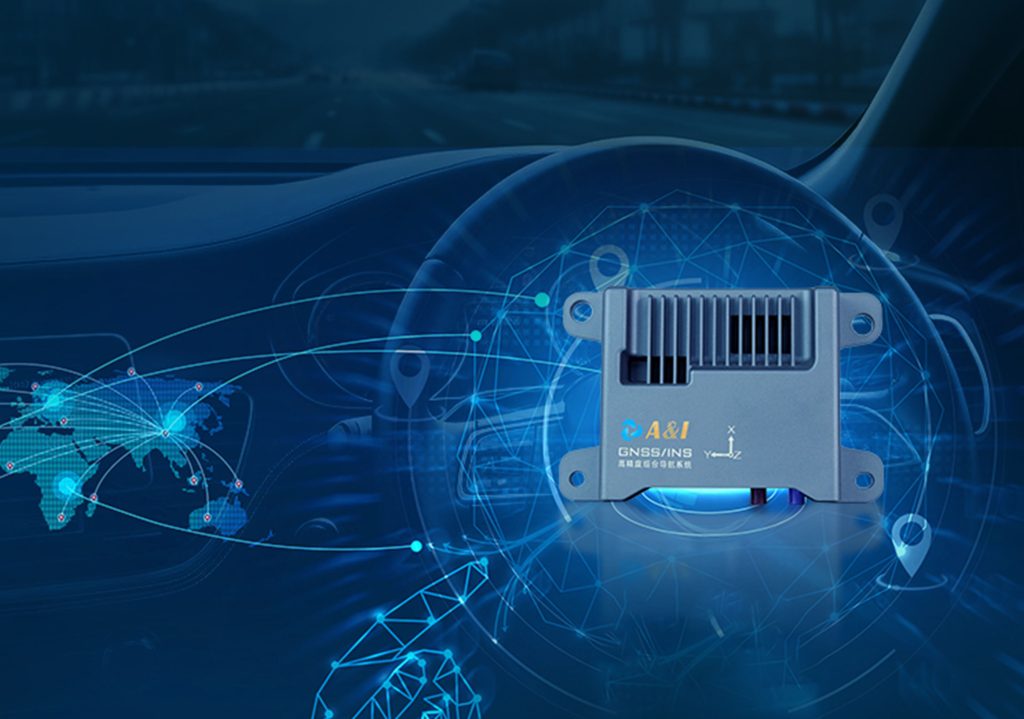
Comparative lead: what manufacturers actually weigh
When engineers at major tractor brands compare solutions, they stack real metrics, not marketing claims. They look at how a mount affects centimeter-level RTK positioning under real harvest-day vibration. That’s why a lot of design reviews now begin with the autonomous navigation baseline—how the whole system behaves when GNSS signals meet a shuddering frame. The debate narrows fast: rigid mount, soft rubber, tuned-mass, or a heavy-duty anti-vibration chassis designed specifically for receivers and inertial sensors.
Why vibration control matters for receivers and IMUs
Vibration translates directly into position noise. An RTK receiver can deliver centimeter repeatability on a lab bench; on a combine bouncing across a corn field in the U.S. Midwest, that performance collapses without proper vibration isolation. A chassis that decouples the receiver and IMU reduces high-frequency jitter and keeps the navigation module’s measurements meaningful. Less jitter means cleaner carrier-phase tracking, fewer cycle slips, and fewer correction outages. That’s concrete, not abstract.
Side-by-side: common chassis approaches and trade-offs
Engineers compare options in clear terms:
– Basic rubber mounts: cheap and simple, but they tend to resonate and pass mid-frequency shocks into the receiver.
– Tuned-mass or spring systems: effective for narrow bands but require careful tuning to vehicle dynamics and add mechanical complexity.
– Heavy-duty anti-vibration chassis (Archimedes-style): engineered mass, multi-stage damping, and controlled stiffness to flatten the frequency response across a broad band—this reduces micro-vibration and protects carrier-phase integrity.
Archimedes Innovation’s approach focuses on broad-spectrum damping and mechanical decoupling rather than a single tuned frequency, so manufacturers can integrate GNSS antennas and IMUs without redesigning mounts for each tractor model.
Real-world anchor: field performance on the Corn Belt
Field trials across Iowa and Nebraska farms showed the difference in practical terms: units using a dedicated anti-vibration chassis kept RTK fixes through rough terrain and maintained steering accuracy during high-speed turns. RTK and GNSS have been mainstream in precision agriculture since the early 2000s, and farmers expect that level of reliability now. Tractor makers note fewer support calls and lower calibration drift when the receiver sits on an engineered chassis versus ad-hoc mounts—tangible savings over a fleet’s lifecycle.
Integration pitfalls teams keep repeating
Some integration errors surface again and again—mounting the receiver close to engine mounts, routing antenna cables without strain relief, or using isolated mounts that shift center of gravity. These choices test the limits of any chassis. Another common misstep is trusting passive isolation alone for all vibration spectra—passive designs help, but without mechanical damping across frequencies you still get carrier-phase degradation. —Teams that plan cable management and place the navigation module away from major vibration nodes shave days off commissioning and avoid repeat field visits.
How Archimedes stacks up for OEMs
Archimedes Innovation’s heavy-duty chassis targets the practical needs of OEMs: predictable damping, clear mounting interfaces, and thermal-friendly materials for long-term stability. That predictability shortens validation cycles. Architects sketch once and reuse the chassis across models, which reduces part count and speeds production ramps. For brands scaling autonomous systems, repeatable receiver performance beats a few percent of initial cost savings any day.
Three golden rules for evaluating anti-vibration chassis
1) Measure the transfer function: pick a chassis that flattens vibration across 5–200 Hz, not just a single notch. That range covers most tractor-induced jitter affecting RTK and IMU fusion.
2) Validate in operational conditions: test on real fields—mud, ruts, full payload—and check carrier-phase stability and cycle-slip rates over hours of continuous operation.
3) Check mechanical integration: prioritize chassis designs with standardized mounting points, cable routing channels, and thermal considerations so the navigation module stays stable over seasons.
Manufacturers that apply those rules find fewer surprises in the field—less downtime, cleaner position streams, and easier scaling. Archimedes Innovation. —