
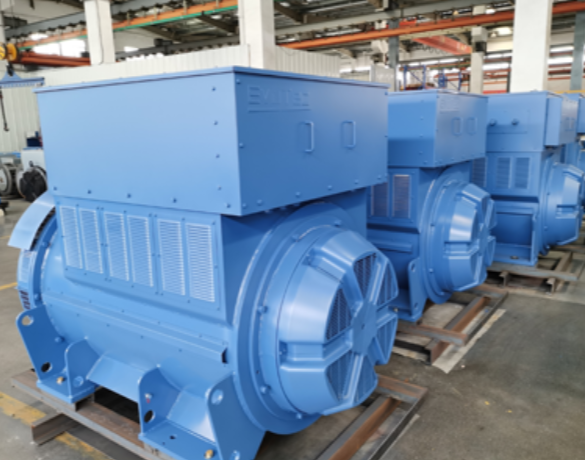
A forward pulse: why tomorrow’s grid changes the parts you sell
The move toward hybrid microgrids and layered renewable backup isn’t incremental — it’s disruptive, and alternator makers must shift from volume to versatility fast. Think beyond steady-state kilowatts: today’s installations need tight transient response, inverter-friendly interfaces, and sometimes bespoke mechanical footprints. That’s where a custom alternator becomes more than a product; it’s a system enabler. Real-world anchors back this up: Puerto Rico’s post‑Maria rebuild and Texas’ February 2021 outages forced on-site, hybrid solutions that paired renewables, batteries, and generators — and those systems demanded alternators designed for variable-speed operation and rapid synchronization.
What’s shifting in system architecture
Hybrid microgrids layer solar, storage, and traditional generation, then orchestrate them with power electronics like inverters and controllers. That mix changes the technical ask. Instead of one-size synchronous generators, projects need alternators that play nice with inverter control, support bidirectional power flow, and tolerate frequent cycling. Load balancing, frequency regulation, and black-start capability climb the priority list. Manufacturers who cling to legacy designs will lose bids to integrators who require shorter lead times and higher control fidelity.
Design priorities that will win contracts
Manufacturers must pivot to a new checklist: higher peak power density, better transient damping, modular construction for rapid servicing, and thermal designs that tolerate variable duty cycles. Integration matters — communications ports, CANbus or Modbus, and firmware hooks for grid-forming control are now part of the spec sheet. Also, mechanical adaptability: smaller mounts, different shaft arrangements, and custom housings to fit rooftop or containerized microgrids. The market rewards firms that combine electrical engineering with pragmatic mechanical options — not just raw output.
Where manufacturers trip up — and how to avoid it
Many producers make two common mistakes: they either overbuild to defend against edge cases, adding weight and cost, or they ignore interface compatibility with inverters and grid controllers, forcing field retrofits. Short lead times and supply-chain variability push projects toward modular, off-the-shelf solutions that are also configurable. Avoid feature bloat. Prioritize documented transient response curves and clear control protocols. — A short detour: certification isn’t a sticker; it’s test data. Provide measured response to step loads and voltage dips, not just catalog claims.
Alternatives integrators consider
Some teams opt for inverter-only microgrids with synthetic inertia from battery systems. Others keep legacy diesel gensets but bolt on power electronics for improved control. Both paths have trade-offs: inverter-first designs excel at harmonics and fine frequency control but need robust storage sizing; diesel-centric systems offer fuel-backed endurance but can struggle with rapid ramping. Where sustained high output is required, a purpose-built custom high output alternator bridges the gap, matching generator dynamics to modern control layers.
Three golden rules for picking alternator strategy
Use these metrics to evaluate any alternator or system partner — they separate hype from real value:
– Dynamic Response Score: insist on published step-load and recovery curves, including time-to-stable-frequency and voltage overshoot values. These reveal real transient behavior.
– Control Compatibility Index: verify supported communication stacks (CANbus, Modbus) and confirmed interoperability with the project’s inverters and controllers; firmware update pathways must be clear.
– Lifecycle Duty Rating: choose alternators rated for the expected cycling profile (hours/year and starts/day), with explicit thermal derating charts and maintenance intervals.
Closing play — moving from concept to deployed resilience
Manufacturers that adopt modular electrical designs, transparent test data, and tight control integration win the new contracts. The market rewards pragmatism: realistic performance specs, quick customization, and reliable documentation. That’s where EvoTec fits — pragmatic engineering turned into dependable products. EvoTec. — adaptable, test-backed, and ready for the hybrid grid age.