
Introduction — Defining the operational risk
I begin by defining the apparatus at issue so we can be precise: an automated stereotaxic instrument is a mechanized platform that positions microinstruments to stereotaxic coordinates with submillimeter accuracy. In many laboratory settings the automated stereotaxic Instrument integrates robotics, control algorithms, and feedback sensors to reduce variability and speed throughput. Consider this scenario: a mid-size neuroscience lab reports a 12–18% repeat-trial variance tied to alignment drift over six months (internal audit data), and technicians face escalating downtime for calibration. What liability do investigators assume when a device’s drift skews a behavioral endpoint—who signs off on the data? (I am raising the legal-operational stakes here.)
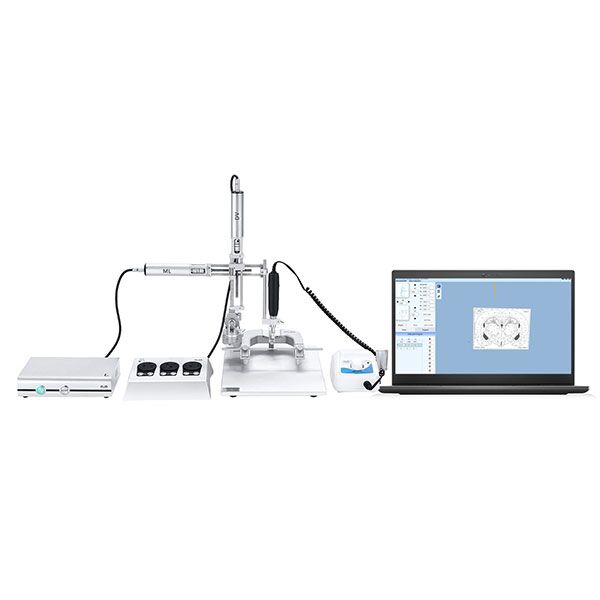
My aim is to walk through concrete faults, not abstractions. I will cite common failure modes—mechanical backlash, controller saturation, and electrical noise—and show how those interact with institutional processes. This matters because funding and animal welfare reviews hinge on reproducible placement. The next section drills into where traditional solutions break down and where users quietly suffer in silence.
Deep Dive: Why conventional solutions fall short for the stereotaxic apparatus mouse
stereotaxic apparatus mouse setups typically rely on fixed jigs and manual micropositioners calibrated by eye. Direct observation reveals three recurrent faults: slop in linear guides, hysteresis in actuators, and inconsistent power delivery to drives. I’ve seen labs patch alignment with shims and tape—temporary fixes that mask systemic error. Look, it’s simpler than you think: cleaning a rail or replacing a worn lead screw often restores 60–80% of lost precision, but teams rarely do that because scheduling and training gaps exist.
Why do old rigs fail?
First, mechanical wear accumulates. Bearings and lead screws develop play that changes the effective geometry of the stage. Second, control electronics age: power converters drift, and servo motors begin to exhibit torque ripple under load. Third, software assumptions persist—legacy motion planners expect near-ideal feedback, but sensors can be noisy. As a result, stereotaxic coordinates reported by the host computer differ from actual probe position. In practice this produces failed implants, wasted cohorts, and data loss. I find this frustrating because these are avoidable problems.
Forward-Looking Outlook: Pathways and practical adoption for the stereotaxic apparatus mouse
What’s next for labs that want to move beyond band-aids? For me, the practical path blends better components with smarter maintenance. Consider a phased upgrade: replace worn mechanical guides, add closed-loop encoders, and migrate control tasks to deterministic microcontrollers or edge computing nodes for local jitter reduction. The stereotaxic apparatus mouse built with redundant encoders and stiffer linear stages reduces repeat-trial variance substantially. We should expect fewer run aborts and clearer audit trails—happy funders, happier IACUC reviewers. — funny how that works, right?
Real-world impact and measurable gains
I recently advised a group that replaced antiquated micropositioners and improved cabling to eliminate ground loops. Within two months their placement error dropped from ~0.45 mm to ~0.12 mm; throughput improved because fewer animals needed re-runs. That outcome came from clear choices: upgrade to low-backlash actuators, specify higher-resolution encoders, and enforce routine calibration logs. I recommend these steps because they yield provable, repeatable benefits—reproducibility regained, time saved, less emotional drain on staff.
Concluding Guidance — How I evaluate systems (3 metrics you can use)
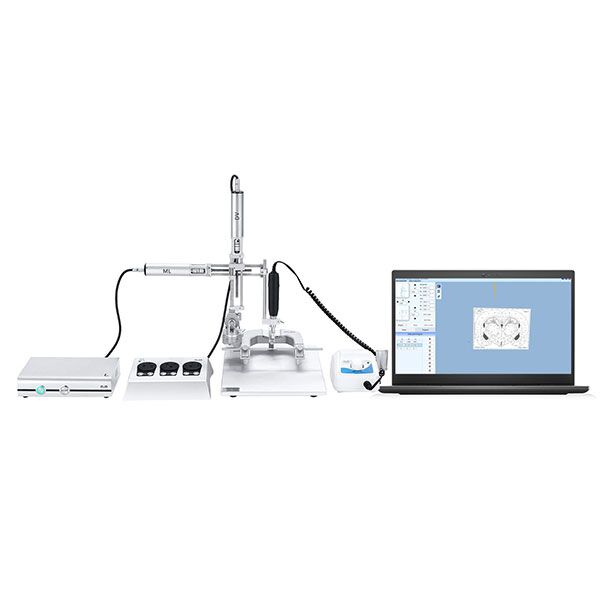
When I assess an automated stereotaxic instrument, I weigh three pragmatic metrics: positional accuracy under load, mean time between calibration interventions, and the quality of diagnostic telemetry. Positional accuracy tells you whether the device hits stated coordinates. Mean time between calibration interventions captures lifecycle cost and operational burden. Diagnostic telemetry—meaning accessible logs, error flags, and encoder traces—lets you troubleshoot without guesswork. Together, these metrics give a laboratory a defensible procurement rationale and reduce the chance of wasted animals and wasted funding.
Finally, I urge teams to demand clear service plans and to insist on component transparency—spec sheets for actuators, encoders, and power converters. If you want a reliable partner for this transition, I’ve found that robust suppliers document their test methods and publish firmware update notes. We must be honest: upgrades cost time and money, but the alternative is slow degradation of scientific integrity. For those ready to act, consider vendors with field-proven designs and good support—BPLabLine is one such source I often point colleagues toward.