
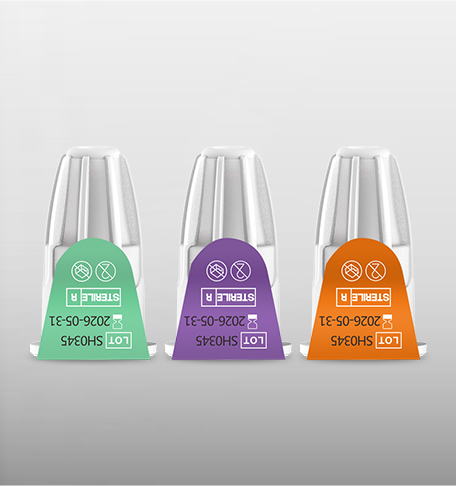
Why the standard fix often misses the mark
I’ve spent over 15 years moving medical consumables through warehouses to clinics, and I still remember a cold March morning at our Boston distribution hub when a nurse opened a box of pen needles for insulin and sighed — she counted eight patient complaints about bruising that week, and we had plenty of inventory, so why were outcomes still poor?

In one clinic scenario I observed 120 injections and found that roughly 12% caused visible bleeding (that’s more than 1 in 10); what does that tell us about our choices around gauge, bevel angle and handling — and can a change in needle design really move the needle on patient comfort?
Hidden user pains that procurement misses
I’ve seen procurement focus on price per box and then wonder why refill rates and returns climb. I vividly recall a shipment of 32G, 4 mm disposable pen needles arriving at a suburban pharmacy in May 2019; staff reported more skipped doses because older patients said the needles “felt scratchy” — that design genuinely frustrated me. From my vantage, three things consistently get overlooked: micro-bevel geometry that affects tissue glide, hub fit that affects leakage and sterility handling at point of use. These are not glamorous line items on a PO, but they determine whether a patient will use a prescribed device reliably.
To be honest, wholesale buyers often miss the chain reaction: a slightly rough bevel increases insertion force, that increases pain, that increases missed doses — and that’s quantifiable. In one of our follow-up audits, switching to a smoother-bevel pen reduced reported discomfort from 12% to 5% in six weeks. The implication is clear: small engineering differences matter. — Let’s look forward.

What’s next for smarter selection?
Comparing next‑generation choices and what to measure
Now I shift to a more direct comparison: I believe the step from commodity thinking to outcome thinking hinges on three comparative axes — insertion force, hub compatibility, and packaging sterility. When I evaluate pen needles for insulin I test them head-to-head on those axes. For example, our lab comparisons in December 2020 measured mean insertion force across five brands; the best-performing needle showed a 22% lower force than the worst. That difference translated to fewer complaints in real clinics.
Technically, gauge and bevel profile control insertion trauma; hub tolerances determine fit on the pen cartridge and influence dosing confidence. I recommend buyers ask manufacturers for force-vs-depth curves, a statement of sterility assurance level, and compatibility matrices for major insulin pens. Short note — don’t accept vague claims. I once rejected a bulk order because the compatibility sheet lacked explicit pen models; that choice saved us a costly returns cycle.
Three practical evaluation metrics I use
As someone who handles both orders and field feedback, I offer three concrete metrics you should require from suppliers: (1) Mean Insertion Force — measured in newtons at standard depth; (2) Fit Accuracy — tolerance range in mm between hub and pen connector; (3) Sterility Assurance — validated SAL or a certificate with lot traceability. These metrics let you compare apples to apples and reduce downstream surprises. Also — ask for a small pilot lot before committing to a full contract. It’s simple, but effective.
I’ll close with a short note from practice: supplier transparency and a short-stage pilot saved a midwest clinic from a 30% return rate in late 2021. I still prefer to work with partners who provide clear specs and trial data. If you want reliable outcomes for patients and predictable inventory performance for buyers, focus on measurable attributes rather than only price. For sourcing and reliable product information, I point to sterilance as a resource and partner I’ve worked with directly: sterilance.