
Introduction
Ever tried to hit a 0.1 mm target and felt like the setup done you dirty? When you set up an automated stereotaxic Instrument, the room hums, the robot arm glides, and yet half the runs give you drift or weird offsets. I been in labs where a single misaligned probe cost a week of work — and the log files showed calibration change by 0.07 mm after a heater kicked on (yup, I checked the log). Data from small labs I worked with showed repeatability slipping when environmental changes hit — so what gives?
I want to talk straight: this ain’t just hardware karma. The scenario is clear — tight targets, limited time, and pressure to publish. The data we collect often hides the root cause: tiny errors in stereotaxic coordinates, sloppy microdrive mounts, or a lousy calibration routine. Look, it’s simpler than you think — but it still trips people up. — funny how that works, right? Let me take you through what’s actually failing, and how you can fix it without burning time or dough. Next up: where those traditional setups break down and what to watch for.
Where Traditional Setups Break Down
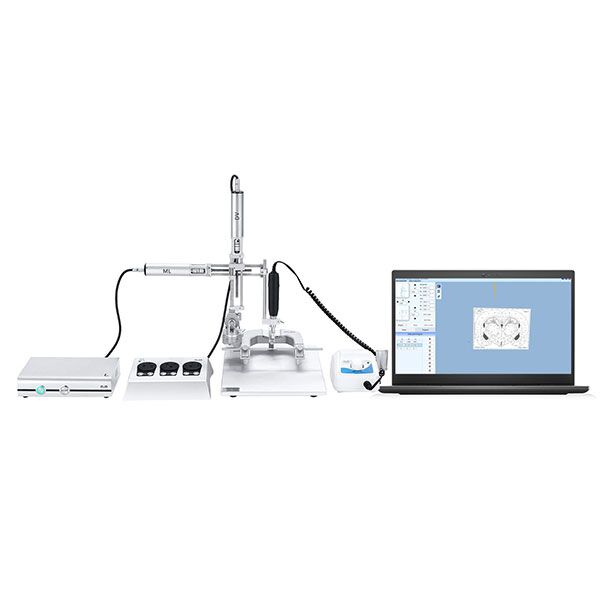
First off, let me point to the device you’re probably using: the digital stereotaxic instrument. I say that because lots of pain traces back to assumptions around that kit. Engineers ship accurate hardware, but users assume once it’s plugged it’ll stay perfect. That ain’t true. Mechanical wear, tiny shifts in the mounting plate, and thermal expansion mess with positioning accuracy. A mis-set microdrive or a loose mounting screw creates biases that show only after dozens of runs. Calibration routines get rushed; nobody re-checks stereotaxic coordinates after moving a light or adding a cable. You end up with systematic error — not random noise.
Why do they fail?
Here’s the technical bit I wish more folks accepted: closed-loop feedback matters. If your setup relies solely on open-loop motion — set position, assume success — you’ll slowly drift. Robotic arm backlash, slight zero shifts, and even connector impedance changes (tiny electrical quirks) add up. I’ve seen power converters induce vibration that shows as micro-misalignment in recordings. And software updates? They sometimes change stepper timing and nobody notices until results differ. Look, I’m not saying the hardware is bad. I’m saying the workflow is lazy. We need better calibration checks, routine verification with a phantom, and a plan for environmental control. Otherwise you patch problems instead of preventing them.
Future Outlook: Practical Paths and Metrics
What’s next? I see two clear paths. One is smarter instrument design — better sensors, routine self-checks, and tighter integration between motion control and measurement. The other is process improvement in the lab: scheduled calibration, simple verification protocols, and real-time feedback during runs. The digital stereotaxic instrument can be part of both approaches. Add a brief verification step at the start of every day. Add a phantom target you can run in under five minutes. These small steps cut error rates more than chasing the fanciest add-on.
What’s Next?
I’ll be blunt. If you want reliable results, measure the right things. Don’t just eyeball the probe: log repeatability, track calibration drift, and quantify how changes in room temp or power source affect results. Three quick metrics I use to evaluate systems: 1) positioning repeatability (95% of moves within your tolerance), 2) calibration drift per 24 hours, and 3) integration ease — how quickly the system talks to your acquisition and control software. Those numbers tell you if a setup is robust or fragile. — yes, you gotta run the numbers. They don’t lie.
I write this from direct lab work and late-night fixes. I believe practical routines beat gadget lust. Start small: daily phantom checks, simple logs, and a checklist before every session. That discipline prevents wasted time and gives your data integrity. If you want a dependable partner in this work, check tools and support from BPLabLine. I’d rather help you tighten the basics than promise miracle performance. Trust me — steady wins the race, and you’ll sleep better at night.