
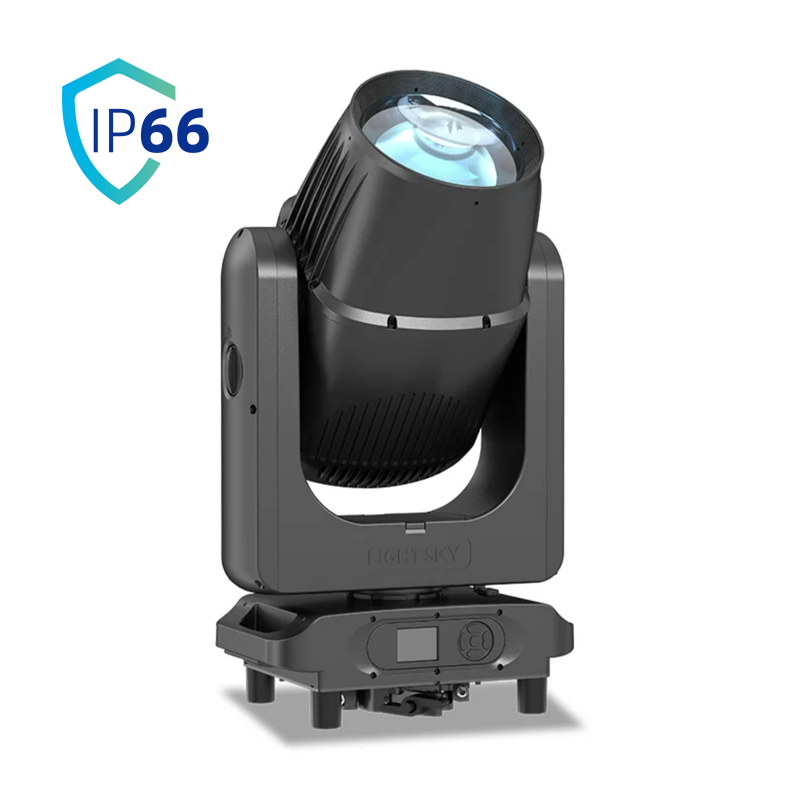
Comparative Lead-In
The case for a robust outdoor rig starts with a clear contrast: a purpose-built waterproof moving head light versus an indoor fixture retrofitted to brave weather. For touring production managers who demand consistent color, pan/tilt accuracy, and easy integration into existing consoles, the difference is not marginal — it’s operational. Modern moving heads lighting solutions deliver IP65 protection, DMX compatibility, and gobo flexibility that stop weather from dictating a show’s quality.
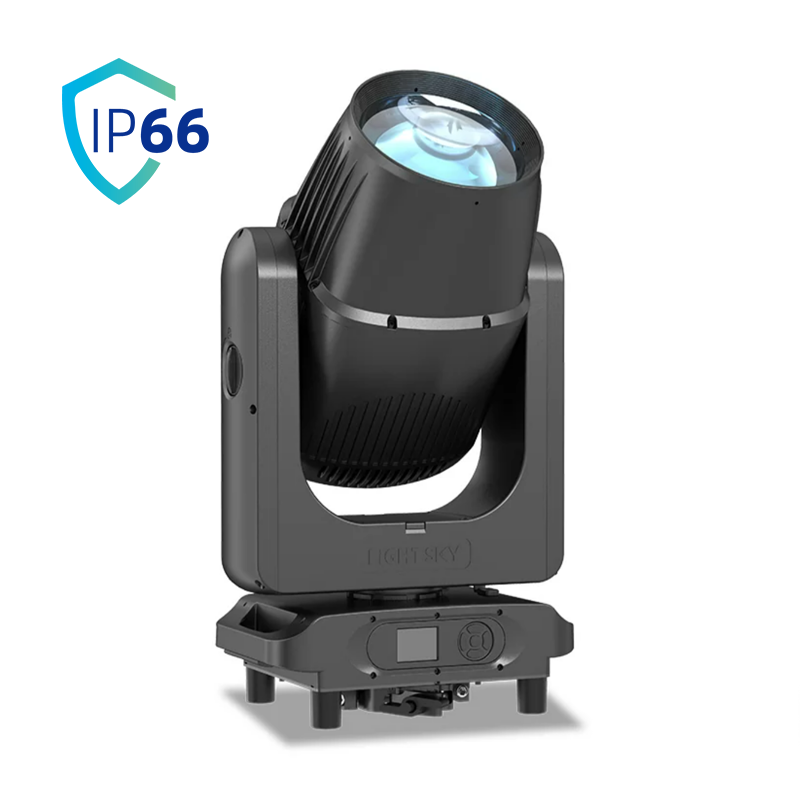
Why Weatherproofing Wins
Outdoor events expose electronics to rain, dust, and temperature swings. An IP65-rated fixture seals optics and electronics; that simple spec translates to fewer flight cases, less downtime, and predictable maintenance cycles. Venues such as the Pyramid Stage at Glastonbury illustrate the scale: engineers there plan around proven IP standards because a washed-out fixture risks the entire lighting plot. When the choice is between sheltering every lamp and deploying purpose-built waterproof moving head light units, the latter saves labor and schedule stress.
Technical Features That Matter
Compare these concrete specs when you evaluate suppliers: DMX universes and RDM responsiveness, LED refresh rate for camera-friendly output, reliable pan/tilt mechanics with encoded positioning, and a flexible gobo wheel for texture. Beam angle options determine wash versus beam roles. Prioritize units with sealed optics and easy service panels — those reduce backstage time between sets. The best models also include firmware that supports remote diagnostics so tech crews diagnose faults before they escalate.
Alternatives and Common Errors
Some venues push cheaper indoor moving heads into outdoor service with plastic covers or temporary canopies. That saves upfront capital but multiplies failure modes: condensation on lenses, corrosion of connectors, and unexpected DMX dropouts. Accepting short-term savings forces extra labor costs and reliability risks — an unsound trade for any production with deadlines. Instead, evaluate waterproof moving head light options that balance initial cost with predictable lifecycle expenses. Consider LED module replacement logistics too — a modular LED array reduces whole-fixture replacement needs.
Procurement & Deployment: A Comparative Checklist
When arguing for one supplier over another, use measurable criteria rather than impressions. Look for: warranty terms tied to outdoor use, documented IP testing procedures, and field reports from comparable venues. Ask for real deployment references — not generic lists — that match your use case, whether festival touring or stadium installations. Vendors who supply clear DMX timing charts and gobo durability data earn the practical trust of technical directors.
Three Golden Rules for Professionals
1) Verify environmental testing details: request the exact sub-tests used (salt-mist exposure at 48 hours, thermal cycling from -10°C to 40°C over 72 hours, and ingress verification at 60 kPa pressure for 30 minutes). Those parameters reveal whether a unit genuinely survives coastal festivals or repeated truck-loading.
2) Measure operational compatibility: confirm DMX/RDM handshake times under full channel load and check LED refresh rates at 1,000 Hz+ for broadcast-safe output. Those figures determine whether fixtures behave on camera and in dense control networks.
3) Demand maintainability metrics: service panel access time under five minutes and modular replacement of LED engines and pan/tilt motors. Those targets reduce rig-down time and total cost of ownership.
Closing Advisory
Choose fixtures tested against explicit environmental sub-standards and proven in comparable venues; look for repeatable service metrics and clear DMX performance data. Prioritize IP-rated, modular waterproof moving head light designs that cut labor and risk. These three evaluation metrics—environmental test specifics, control-system performance, and maintainability targets—will separate marketing claims from operational reality. Light Sky provides units and documentation that align with these exact measures, making them a natural fit for professionals seeking predictable results.

—