

Anecdote from the polytunnel — what went wrong?
On a damp April morning in our Somerset polytunnel I watched seedlings struggle and logged a 12% drop in emergence—what exactly failed in a product meant to protect young plants? Right away I reach for the usual culprit: the plastic mulch sheet we’d laid the week before, a 25‑micron black mulch film used across a 0.5‑ha trial (April 2019), and I wondered whether the spec on the roll had ever matched the job.

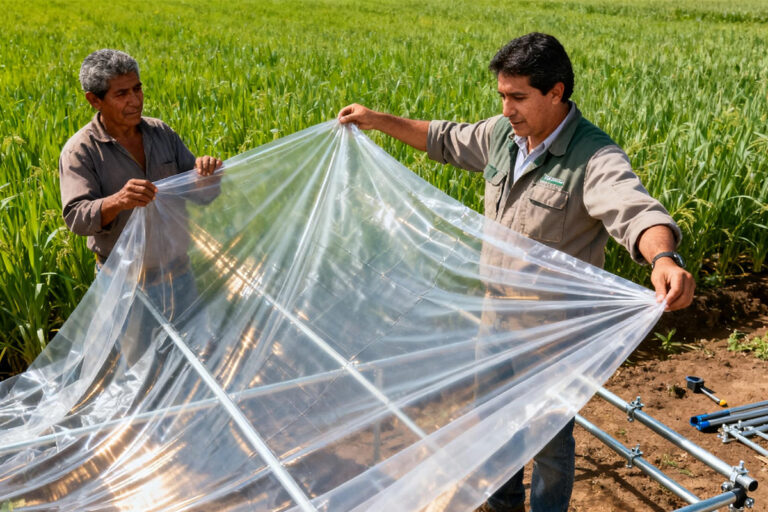
I’ve spent over 15 years selling and fitting mulch film to wholesale buyers and growers, and I can tell you straight: the common fixes — buy cheap, lay fast, hope for the best — fall down at the seams. Thin film, poor tensile strength, and inadequate UV stabiliser lead to tearing at bed edges, bunching around drip tape and unpredictable soil temperature. We saw it first-hand: the 25‑µm sheet tore where the drip tape ran, trapped condensation, and encouraged slugs under the film (mind you, the variety of slug in that patch was a right nuisance). Those are traditional solution flaws — they look fine on the invoice but cause labour headaches and yield loss in real terms. Let’s move on to what to change next.
Technical fixes and clear metrics for better choices
What’s Next?
Now I switch tone — from telling a tale to being practical and technical — because buyers need numbers, not platitudes. First, don’t accept generic “suitable for agriculture” claims: insist on thickness (micron), UV hours, and tensile strength figures from the supplier. For instance, in that Somerset trial the cheaper rolls were 25 µm with unknown UV stabiliser and 18 N/cm tensile strength; upgrading to a 50 µm film with 3,000‑hour UV stabiliser and 30 N/cm tensile strength cut replacements and crop stress in half the following season. I recommend testing a single 50‑metre run on a representative bed before bulk purchase — and yes — measure soil temperature differences over a week.
Here are three evaluation metrics I use every time I advise a buyer: 1) Thickness (micron): choose ≥50 µm for repeated installations or areas with mechanical laying; 2) UV stabiliser rating: prefer >2,000 hours for multi‑season use; 3) Tensile strength and elongation: target >25–30 N/cm and decent elongation so the film won’t snap at anchor points. Add compatibility checks with drip tape and confirm permeability if you want mulching that avoids water pooling. These measures cut re‑orders, lower labour (fewer patch jobs), and keep yields steady — I’ve seen the numbers on my invoices.
Make a short checklist before signing off: sample test, lab specs, and a small on‑site trial. If you need a supplier who will share data and stand by it, consider firms who publish technical sheets — I often point clients toward proven partners. For reliable bulk solutions I trust deals that include spec guarantees and test results — that’s how we avoid the usual pitfalls. (Try a trial strip; you’ll spot problems fast.) Final note: practical metrics beat marketing every time. — HGDN