
Introduction: A Clearer Way to Judge the Glow
Lighting performance is not guesswork; it’s a balance of output, colour accuracy, and system stability. In led lighting manufacturer china, that balance is tested thousands of times each day. Picture a designer in Auckland trying to match the vibe of a warm cafe with crisp task light. The brief is tight, the ceiling is low, and the pendant height must be spot on. Data says more than 70% of the world’s LED fixtures come from China, with mainstream CRI hitting 90+ and lumen maintenance at L70 over 50,000 hours—sweet as, if you pick well. But if the space still feels off, was it the fixture, the driver, or the install?
Here’s the rub: many “fails” come from mismatched components or poor thermal management, not the origin of the fitting. Glare from a shiny diffuser, a cheap driver with high flicker, or a dodgy dimmer curve can wreck a room fast. And the user only sees the glow, not the power converters, optics, or driver logic behind it. So the question is simple: how do you tell what’s going to work in your space, first time, no dramas (and without blowing the budget)? Let’s break down the hidden friction, then compare what’s next.
Under the Shade: The Real Friction with Pyramid Pendant Lights
Why do good specs still disappoint?
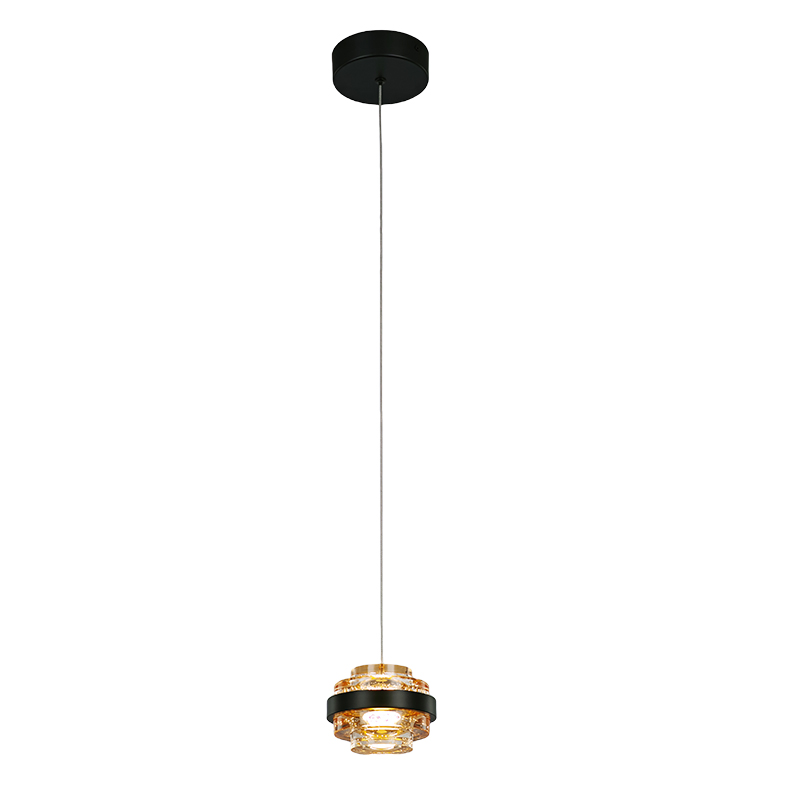
Start with the geometry. A pyramid pendant light throws light differently than a dome or drum. The sloped planes can boost centre-beam candlepower, yet cause edge glare if the lens sits proud of the frame. Traditional solutions put a thick diffuser in front to soften this. That kills sparkle and can drop effective lumens where you need them. Add a basic TRIAC dimmer to a constant-current driver and you’ll see shimmer at low levels—your eyes feel it even if you can’t name it. Another trap: small housings with undersized heat sinks. Heat builds up, LED junction temps rise, and colour shifts. Over months, the glow looks dull. That’s not “China quality”; that’s physics and poor thermal design.
Then you’ve got the quiet culprits. Low-CRI phosphors that make wood look flat. Drivers with high percent flicker outside IEEE guidance. Power converters that buzz under load. And optics without proper UGR control in open-plan offices. Look, it’s simpler than you think: match optics to task, choose drivers tested for your dimming protocol (DALI or 0–10V beats bargain TRIAC in many cases), and demand thermal data, not just marketing fluff. If you’re working with an overseas line, ask for IES files, driver make and model, and photos of the heat path. One more thing—request a burn-in report; early failures often show up in the first 8–24 hours.
Looking Ahead: Comparative Gains You Can Measure
What’s Next
The next leap is not a new shape; it’s smarter guts inside the pendant. New driver stacks use GaN-based power converters to cut switching losses and heat. That means smaller housings can run cooler—funny how that works, right? Optical packs now combine micro-prismatic lenses with internal baffles, so a pyramid can keep crisp accents while hitting lower glare targets. Onboard controllers act like edge computing nodes, smoothing dimming curves and storing fault logs. In the same family, a torch pendant light may favour a tighter beam and higher centre intensity, making it better for bar counters or galleries. The pyramid style spreads task and ambient in one form factor. Different tools, same toolkit—compare photometrics, not just looks.
Forward-looking brands also expose real metrics: flicker percentage across the dimming range, thermal images at steady-state, and L90 projections, not just L70. That helps you spec for mood and maintenance. If your last project felt flat, it likely wasn’t the region of manufacture, but a mismatch between optics, driver type, and space geometry. The takeaway from our earlier section stands, but evolves: judge pendants by system design. And when two models seem similar, weigh the beam file, driver topology, and fixture temperature at 25°C ambient vs 40°C. Small deltas there become big wins after a year in the ceiling—especially in busy hospitality spaces where uptime matters.
To wrap with clear advice, use three checks when choosing any pendant, pyramid or torch: 1) Driver and dimming: request the flicker spec (low percent flicker across the curve, IEEE 1789-aware) and the exact driver model; 2) Optics and colour: confirm CRI 90+, R9 above 50, and review the IES file for beam shape and UGR where relevant; 3) Thermal path: ask for heat-sink mass, junction temperature at full load, and lumen maintenance targets at your real ambient. Do that, and your selection gets easier—and your spaces feel right, day one. For reference design ideas and spec sheets you can parse without fuss, see kinglong.