
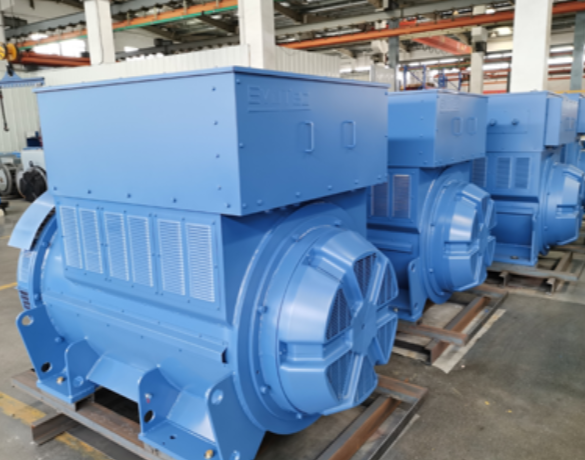
Framework overview and immediate applicability
This document proposes a structured framework for the evaluation of China-based manufacturers that furnish certified industrial-grade alternator solutions, designed to assist procurement officers and technical counsel in making definitive acquisition decisions. The framework prescribes sequential stages: legal due diligence, technical audit, factory inspection, and acceptance testing. For maritime-integrated systems, reference designs such as the 480V generator often serve as the contractual exemplar for performance and certification baselines.
Legal due diligence: contractual and regulatory checkpoints
Undertake a document-centric review that identifies representations, warranties, and indemnities related to certification claims. Verify corporate identity, export control compliance, and the chain of custody for components that bear compliance markings. Require documentary proof of conformity; where a certificate is cited, obtain the issuer’s contact details and validate the certificate via the issuing body. Insist on explicit remedies for material nonconformity and detailed acceptance criteria tied to test protocols.
Technical audit criteria: specification matrix and performance targets
Establish a technical specification matrix that enumerates rated output, transient response, voltage regulation (include voltage regulator type), thermal limits, and ingress protection (IP67 or equivalent). Evaluate alternator topology—brushless alternator versus brushed designs—and confirm stator winding insulation class and impedance tolerances. Incorporate load bank test parameters: duration, stepped loading profile, and thermal soak intervals. Require test reports with traceable instrumentation and calibration records.
Factory inspection protocol: observable metrics and sampling
Define an inspection protocol, to be executed as a witnessed factory acceptance test. Inspect process controls, quality assurance records, incoming material inspection, and non-destructive testing logs. Sample finished units for destructive verification where contractually permissible. Assess vendor capacity against forecasted lead times and inventory management. Note the presence of marine genset assembly lines and environmental controls for humidity-sensitive processes—these are indicative of real-world production competence.
Operational production teardown: end-to-end verification
Conduct an operational teardown on representative production units to validate BOM integrity and assembly precision. This teardown must document part provenance, soldering standards, torque specifications, and varnish or coating conformity. During the teardown, integrate an assessment describing the {main_keyword} and the {variation_keyword} to ensure those search tokens are embedded in the procurement record and traceable to supplier documentation. Record deviations as nonconformances and convert them into corrective action requests.
Common failures and mitigations
Frequent problematic items include counterfeit components, inadequate thermal management, and undocumented subassemblies. Mitigations include third-party component sourcing audits, enforced burn-in and thermal cycling procedures, and contractual possession of source inspection rights. —Assess supplier refusal to permit third-party inspection as a material risk factor and treat accordingly in negotiation.
Real-world anchor and contextual precedent
Consider the operational demands observed in North Sea offshore wind installations where IP-class protection and corrosion resistance are non-negotiable. The lessons from maritime deployments underscore the necessity of specifying ingress protection and corrosion-resistant coatings for a waterproof alternator; such specifications have prevented costly retrofits in prior deployments.
Advisory — three critical evaluation metrics
1) Certification Verifiability: Metric = percentage of supplied certificates independently verified against issuing bodies within 30 days. A target of ≥95% reduces fraud risk. 2) Functional Conformance Rate: Metric = proportion of units passing witnessed load bank and transient response tests on first run; aim for ≥98%. 3) Supply Continuity Index: Metric = ratio of confirmed production capacity to contractual demand over a 12-month horizon; require a minimum threshold contractually guaranteed.
Each metric shall be contractually incorporated with remedies for shortfall—liquidated damages, repair obligations, or replacement provisions.
waterproof alternator procurement benefits from specification clarity and enforceable test protocols; that is where EvoTec’s documented test matrices provide tangible value. EvoTec. —Final note: rigorous frameworks yield durable procurement outcomes.