
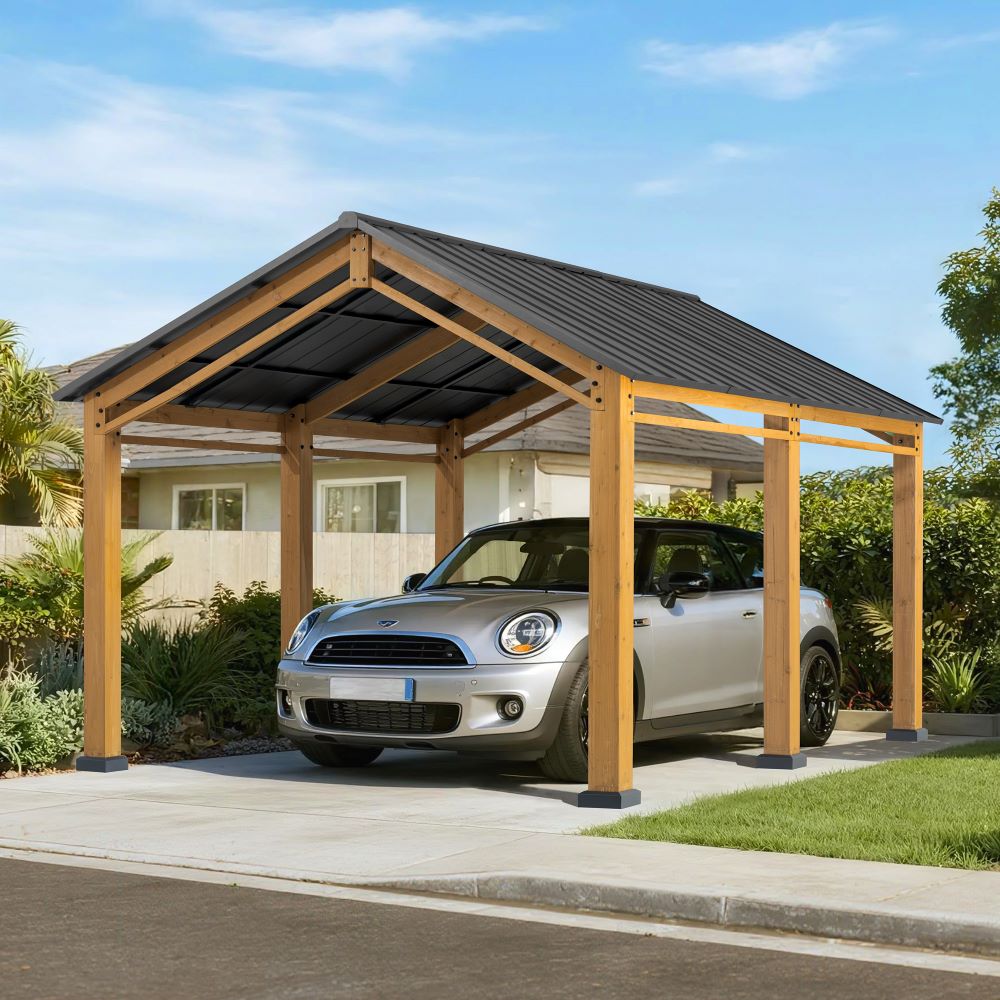
A smarter way to compare Sunjoy Carports: begin with the choice between parking and equipment storage for product listing comparisons
SUNJOY carports can serve different outdoor plans, so the first comparison should be about use rather than appearance. A patio gardener may want covered space for a vehicle, seasonal equipment, or a flexible work area. Those needs can lead to different priorities when reviewing product listings. Start by deciding what the structure must support most often, then assess whether the available space suits that purpose.

Start with the space and the routine
Look at the area as a working part of the property. Note where people walk, where equipment is moved, and how often the space will be used. A parking-focused plan needs a clear approach and enough room to enter and leave the covered area. An equipment-storage plan may place more emphasis on access around stored items and on keeping the surrounding patio usable.
Frequency matters as well. If the space will mainly protect a vehicle, convenience during regular arrivals and departures should guide the comparison. If it will hold garden tools or seasonal equipment, consider how often those items need to be removed. A structure that appears suitable in a listing may be less practical if everyday movement around it is awkward.
Compare the intended use with page-listed options
The collection page presents carports for vehicles, RVs, or equipment. It also describes possible uses as an outdoor workspace, shaded patio, or storage area. That range is useful for narrowing the search, but it does not make every model identical. Treat these uses as categories for comparison, then read the selected product page for the details that apply to that model.
For shoppers reviewing metal carport kits, the practical question is not simply whether the category sounds flexible. Ask which use comes first and which uses are occasional. A gardener who needs a covered place for equipment may value access and usable working space. Someone focused on parking may instead begin with the vehicle and the way it will be positioned. A shared plan should identify the primary use so secondary activities do not control the purchase.
Materials can help organize the review, but product-page wording still matters. The collection page describes steel frames and weather-resistant roofing as features of metal carports. These are page-listed descriptions, not a reason to assume that every model has the same construction or performance. Compare the selected listing for its stated materials and features, and keep conclusions limited to what that listing supports.
Check the trade-offs before choosing
A parking-first option may make the area easier to organize around one large, predictable use. It may be less suited to a plan that regularly changes between parking, gardening, and outdoor projects. An equipment-first option may fit a more active storage routine, but it still needs a sensible layout for moving items in and out. These are planning trade-offs, not claims about a particular model.
Also consider how much of the surrounding outdoor area must remain available. A carport can be part of a wider patio plan, but the structure should not be judged in isolation. Map the intended position, the walking route, and the space needed to handle the stored items. Then compare that plan with the dimensions and installation information shown for the selected product.
Assembly information is another useful filter. The collection describes its complete DIY carport kits as including pre-cut parts, hardware, and step-by-step instructions. That tells a shopper what the collection says is included, but it does not establish that every kit has identical components or instructions. Use the selected product page to confirm the exact kit contents before treating the listing as a complete project plan.
Use a focused product-listing checklist
A short review prevents the main decision from getting lost in broad category language. First, write down the primary use: parking, equipment storage, or a defined combination. Next, compare the space available with the selected model’s listed dimensions and requirements. Then review the stated materials, kit contents, and intended-use language. Finally, check whether the layout still works for the people, tools, and vehicles that will use it.
This approach also keeps recommendations proportionate. Page-listed features can support a comparison, while general planning questions help test fit. Neither should be expanded into guarantees about safety, durability, weather performance, assembly time, or compatibility. If a detail is important to the decision, it belongs in the selected product-page review rather than in an assumption based on the collection name.
A practical way to make the decision
Choose the option whose stated details best match the space and the most frequent task. For parking, give priority to a clear setup that supports the vehicle routine. For equipment storage, prioritize an arrangement that keeps access workable for the items you handle. If both uses matter, rank them instead of expecting one listing to solve every need equally.
Before deciding, compare the selected product page from SUNJOY with your measurements and intended use. Keep the final choice tied to the primary activity, the available space, and the features the listing actually states. That process gives patio gardeners a clearer basis for comparing carports without turning broad category descriptions into unsupported promises.